The rapid evolution of automotive manufacturing demands precision machining of large-scale parts with enhanced efficiency and reliability. Large CNC gantry milling machines have emerged as pivotal equipment in meeting these needs. This article provides a comprehensive technical insight into the fundamental structure and operational logic of these machines, the pivotal role of CNC control systems, and the automation technologies empowering unprecedented accuracy and throughput.
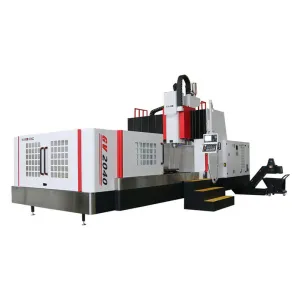
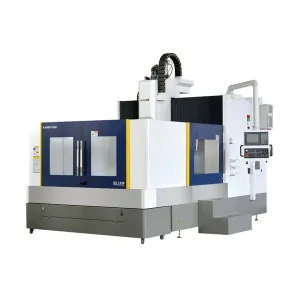
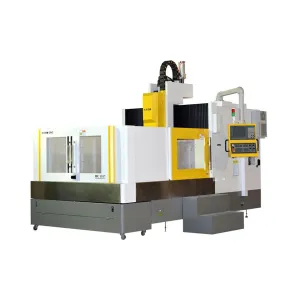
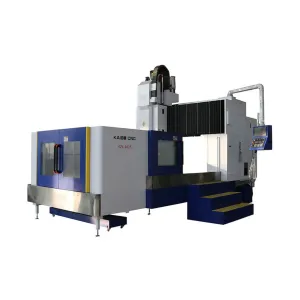
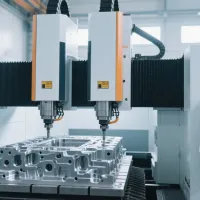
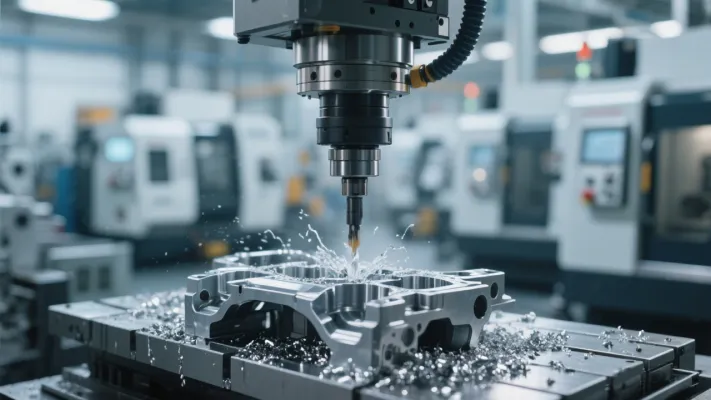
A CNC gantry milling machine designed for large automotive parts consists primarily of a rigid gantry frame spanning over the workbench, a high-precision spindle head capable of multi-axis movement, and a robust base ensuring vibration damping. The gantry structure, often fabricated from high-strength alloy steel or cast iron, ensures minimal deformation under heavy cutting forces, enabling machining dimensions exceeding 5 meters in length and width.
The machine's axes operate along X, Y, and Z coordinates, with additional rotary axes available in advanced configurations. The running logic involves synchronized linear and rotational movements controlled in real-time to realize complex contouring and surface finishing on substantial automotive components such as engine blocks, chassis parts, and transmission housings.
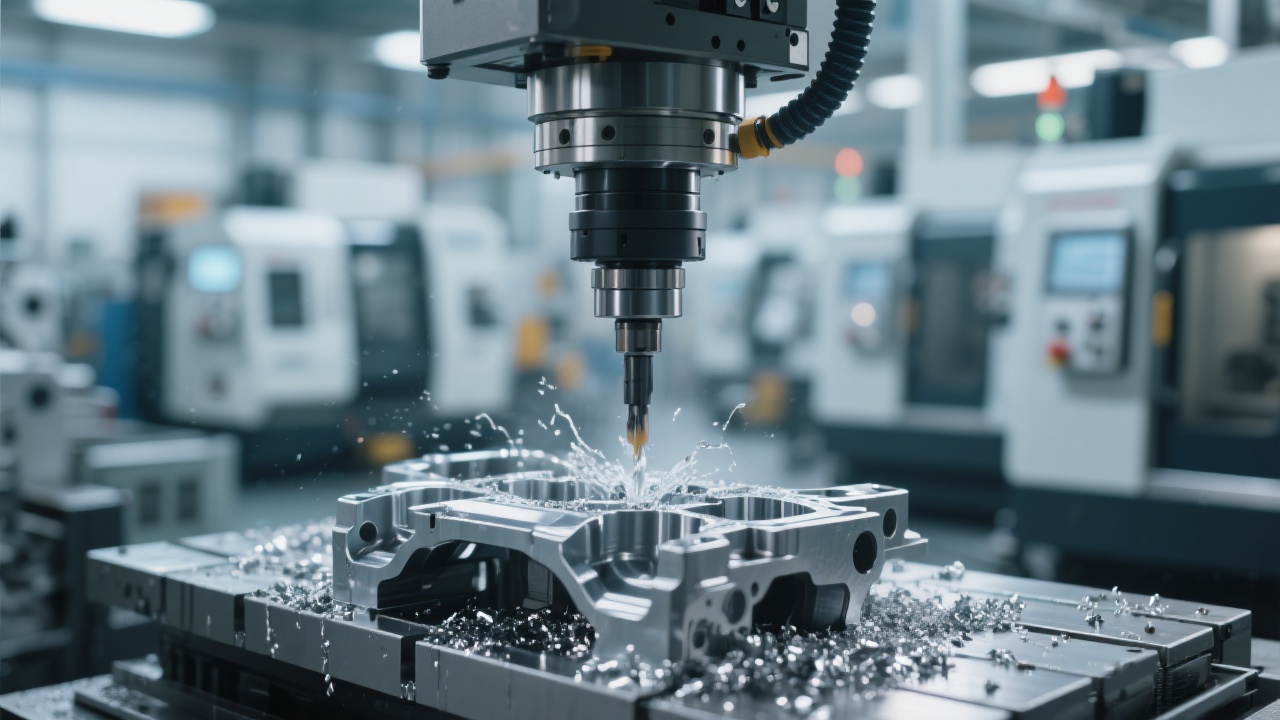
The embedded CNC system governs the entire machining process with sophisticated control algorithms that translate CAD/CAM data into precise toolpaths. Real-time sensor input delivers immediate feedback on tool position, spindle speed, and cutting forces, enabling adaptive adjustments to maintain dimensional accuracy within ±0.01 mm.
The closed-loop control mechanism integrates servo motors and encoders with a high-speed communication bus, ensuring millisecond-level response times. This results in optimized cutting conditions, reduced tool wear, and minimal thermal deformation—critical factors in producing automotive parts that must meet stringent industry tolerances.
Adjusting parameters such as spindle speed, feed rate, and depth of cut directly influences machining quality and cycle time. For example, a spindle speed optimized to 1500–3000 RPM combined with a feed rate of 2000–3000 mm/min can improve surface finish while minimizing chatter and vibration.
Additionally, advanced coatings on cutting tools and coolant strategies complement parameter selection to extend tool life by up to 30%, significantly lowering operational costs and downtime.
Automated CNC gantry milling drastically reduces human error, delivering consistent dimensional stability even over long production runs. In practical automotive manufacturing scenarios, implementing automated gantry milling has improved production throughput by approximately 25%, with a documented increase in first-pass yield exceeding 20%.
The seamless integration of automated tool changers, workpiece loaders, and inspection systems within the gantry framework facilitates continuous, unattended operation, allowing manufacturers to optimize labor allocation and maintain tight delivery schedules.
| Feature | Traditional Milling | CNC Gantry Milling |
|---|---|---|
| Working Area | Up to 2 meters | Over 5 meters |
| Machining Accuracy | ±0.05 mm | ±0.01 mm |
| Automation Level | Manual or semi-automatic | Full CNC + Automated tool & workpiece handling |
| Production Efficiency | Moderate | Increased by 20-30% |
| Labor Dependency | High | Low |
“Integrating high-precision CNC gantry milling technology into automotive production lines is a game-changer, enabling manufacturers to achieve consistent quality, enhance throughput, and reduce operational costs simultaneously.” – Dr. Jane Lin, Industry Automation SpecialistDiscover How Kaibo CNC Gantry Milling Solutions Can Boost Your Automotive Manufacturing Efficiency

 171
|
171
|
 GV1625 CNC milling machine
large composite mold machining
dual-column milling
composite structural parts processing
precision CNC machining
66
|
High - speed CNC milling machine automated machining
GV6050 intelligent control system
Double - column vertical machining center
CNC machine tool automation tutorial
Intelligent manufacturing application skills
412
|
GV6050 CNC milling machine
high-speed heavy cutting
complex material machining
dual-column vertical machining center
CNC mill efficiency
GV1625 CNC milling machine
large composite mold machining
dual-column milling
composite structural parts processing
precision CNC machining
66
|
High - speed CNC milling machine automated machining
GV6050 intelligent control system
Double - column vertical machining center
CNC machine tool automation tutorial
Intelligent manufacturing application skills
412
|
GV6050 CNC milling machine
high-speed heavy cutting
complex material machining
dual-column vertical machining center
CNC mill efficiency
 316
|
large CNC milling machine
double column mill
GV1625 performance
complex part machining
industrial precision machining
439
|
intelligent CNC milling machine
heavy-duty machining
GV6050 CNC mill
CNC automation
smart manufacturing
316
|
large CNC milling machine
double column mill
GV1625 performance
complex part machining
industrial precision machining
439
|
intelligent CNC milling machine
heavy-duty machining
GV6050 CNC mill
CNC automation
smart manufacturing