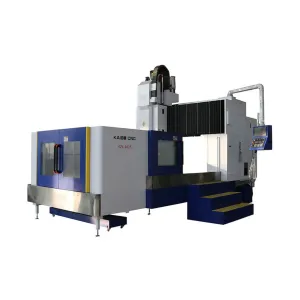
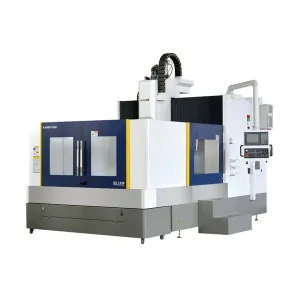
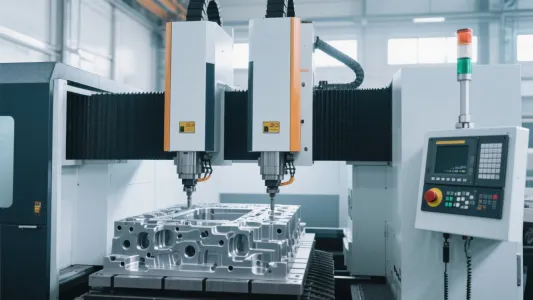
In modern automotive manufacturing, precision and efficiency are critical to maintaining competitive advantage. The CNC gantry milling machine has emerged as a benchmark technology for machining large automotive components with superior accuracy and throughput. This article explores the fundamental working principles of large automotive component CNC gantry milling machines, focusing on the robust gantry structure, advanced CNC control systems, and cutting-edge machining techniques that collectively drive operational excellence.
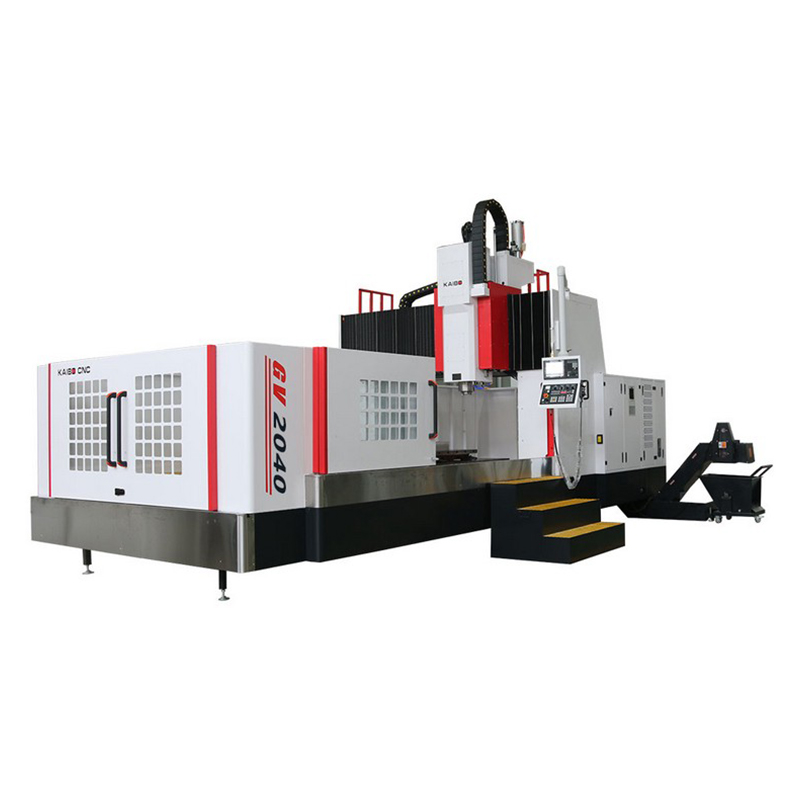
The distinctive gantry framework of these milling machines is engineered for exceptional rigidity and minimal deflection under heavy loads. This design facilitates stable tool positioning, significantly reducing vibration during the machining process, which is essential for achieving micron-level tolerances in large automotive parts.
Key advantages of the gantry structure include:
At the core of the machine lies the CNC system control workflow, which orchestrates machine movements with precision. Modern CNC controllers integrate multi-axis coordination, real-time feedback loops, and adaptive cutting algorithms to optimize machining paths.
Typical processing steps include:
The integration of high-performance cutting tools with optimized parameters (e.g., feed rates, spindle speeds, and coolant delivery) enables high-quality machining of complex automotive geometries. Advances such as ultrasonic vibration-assisted cutting and high-speed spindle technology further elevate machining precision while reducing cycle times up to 30% compared to conventional methods.
Additionally, adaptive tool path strategies minimize tool deflection and thermal distortion, essential for large and heavy automotive parts where dimensional consistency is critical.
A leading automotive components manufacturer integrated the 凯博数控 CNC gantry milling machine into their production line. After deployment, they observed a 25% increase in throughput and a 15% reduction in scrap rate, attributed to the machine’s automation, precision control, and stability. The automated tool change system and remote diagnostics further enhanced uptime and maintenance efficiency.

Automation embedded in large automotive part CNC gantry milling machines is transforming production lines by:
For technical teams and procurement decision-makers, adhering to a structured operation and maintenance protocol maximizes equipment lifespan:

 478
|
478
|
 FANUC GV2030 Heavy Machining Center
intelligent manufacturing upgrade
high precision machining solutions
industrial 4.0 equipment
CNC milling machine application
FANUC GV2030 Heavy Machining Center
intelligent manufacturing upgrade
high precision machining solutions
industrial 4.0 equipment
CNC milling machine application
 304
|
FANUC GV2030
Heavy Duty Machining Center
CNC Milling Machine
Production Efficiency
High Precision Machining
304
|
FANUC GV2030
Heavy Duty Machining Center
CNC Milling Machine
Production Efficiency
High Precision Machining
 141
|
high-speed CNC milling machine
heavy cutting CNC mill
dual column vertical machining center
high-speed machining technology
industrial milling solutions
141
|
high-speed CNC milling machine
heavy cutting CNC mill
dual column vertical machining center
high-speed machining technology
industrial milling solutions
 487
|
GV2040 CNC milling machine
automotive parts machining
heavy-duty CNC equipment
double-column CNC milling machine
intelligent manufacturing
487
|
GV2040 CNC milling machine
automotive parts machining
heavy-duty CNC equipment
double-column CNC milling machine
intelligent manufacturing
 316
|
large CNC milling machine
double column mill
GV1625 performance
complex part machining
industrial precision machining
316
|
large CNC milling machine
double column mill
GV1625 performance
complex part machining
industrial precision machining