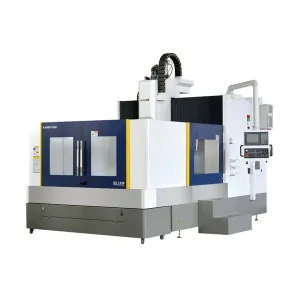
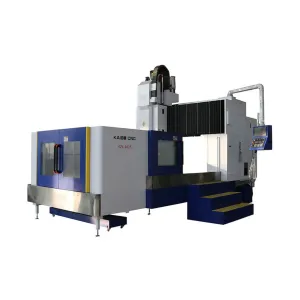
Selecting a CNC machine is a production decision, not simply a comparison of machine specifications. The right configuration should match the workpiece, required process, quality target and planned production capacity. Kaibo CNC supports manufacturing teams in evaluating vertical machining centers, CNC engraving milling machines and customized CNC machine tools through practical application criteria.
A CNC machine should first be assessed against the physical and functional requirements of the parts it will produce. Workpiece dimensions, weight, material properties, clamping method and machining surfaces all affect the suitable machine structure, travel range, spindle arrangement and axis configuration.
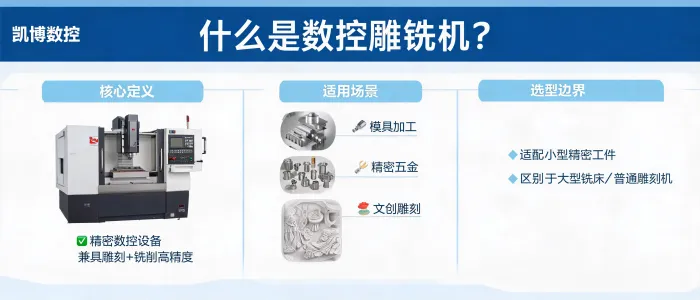
Different CNC machine categories serve different machining priorities. Defining the main process before procurement helps avoid selecting capacity that does not support the actual production requirement.
Axis configuration should be selected according to the number of surfaces, orientations and complex profiles that must be machined. More axes can expand machining flexibility, but the decision should be based on part geometry and process efficiency rather than configuration alone.
Appropriate for workpieces primarily machined from the top and sides, including many prismatic parts, plates, cavities and standard milling operations. The main assessment points are travel range, workholding and cycle-time requirements.
Useful when a workpiece requires indexed or continuous rotational positioning. It can reduce repeated reclamping for parts with features around a circumference or on multiple side faces.
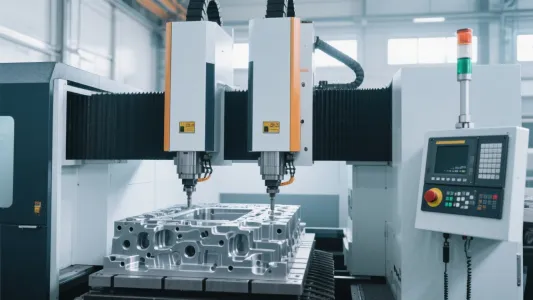
Considered for complex curved surfaces, compound angles and features that benefit from multi-directional tool access. Evaluation should include programming capability, fixture strategy, tool reach and the required machining accuracy.
Required accuracy should be evaluated in relation to the complete manufacturing process. Machine selection involves more than nominal specifications: tool condition, fixturing, thermal conditions, programming strategy, material behavior and inspection methods can all influence finished-part results.
For procurement planning, specify the critical dimensions, tolerances, surface expectations and repeatability needs of the target parts. This creates a clearer basis for discussing machine configuration and process suitability with the equipment supplier.
A machine may be suitable for producing a sample part but not necessarily for the intended production schedule. Capacity planning should account for part volume, machining time, changeover frequency, operator workflow and the expected mix of products.
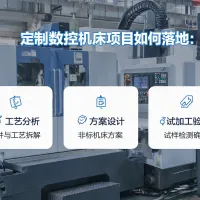
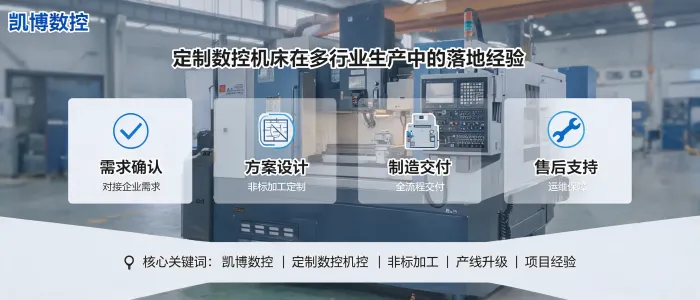
Standard CNC equipment is often appropriate for established machining tasks. A customized CNC machine tool may be considered when workpieces, fixtures, process sequences or operating methods create requirements that are not well addressed by a standard configuration.
Machine selection continues beyond the initial purchase. Installation coordination, technical communication, maintenance planning and access to service support are practical factors for maintaining stable operations over the equipment lifecycle.
Kaibo CNC manufactures 3-, 4- and 5-axis vertical machining centers, CNC engraving milling machines and customized CNC machine tools. When evaluating a project, it is helpful to prepare part drawings, material information, dimensions, process requirements, expected capacity, accuracy targets and any special fixture or customization needs. Clear input supports a more relevant machine and configuration discussion.
Before making a CNC machine procurement decision, confirm that the following questions have clear answers:
A well-defined requirement helps manufacturing teams select CNC equipment that aligns with the workpiece, the process and the realities of production.
 110
|
110
|
 CNC milling machine technology
plastic mold processing
large double-column CNC milling machine
rigidity design
transmission mechanism
CNC milling machine technology
plastic mold processing
large double-column CNC milling machine
rigidity design
transmission mechanism
 478
|
FANUC GV2030 Heavy Machining Center
intelligent manufacturing upgrade
high precision machining solutions
industrial 4.0 equipment
CNC milling machine application
478
|
FANUC GV2030 Heavy Machining Center
intelligent manufacturing upgrade
high precision machining solutions
industrial 4.0 equipment
CNC milling machine application
 423
|
Ningbo Kaibo CNC Machinery
custom CNC machine
project experience
non-standard machining
delivery process
production line upgrade
423
|
Ningbo Kaibo CNC Machinery
custom CNC machine
project experience
non-standard machining
delivery process
production line upgrade
 498
|
Ningbo Kaibo CNC Machinery
overseas market
3-axis machining center
5-axis machining center
industry trends
498
|
Ningbo Kaibo CNC Machinery
overseas market
3-axis machining center
5-axis machining center
industry trends
 423
|
Ningbo Kaibo CNC Machinery
CNC engraving and milling machine
concept explanation
application scenarios
selection boundaries
423
|
Ningbo Kaibo CNC Machinery
CNC engraving and milling machine
concept explanation
application scenarios
selection boundaries