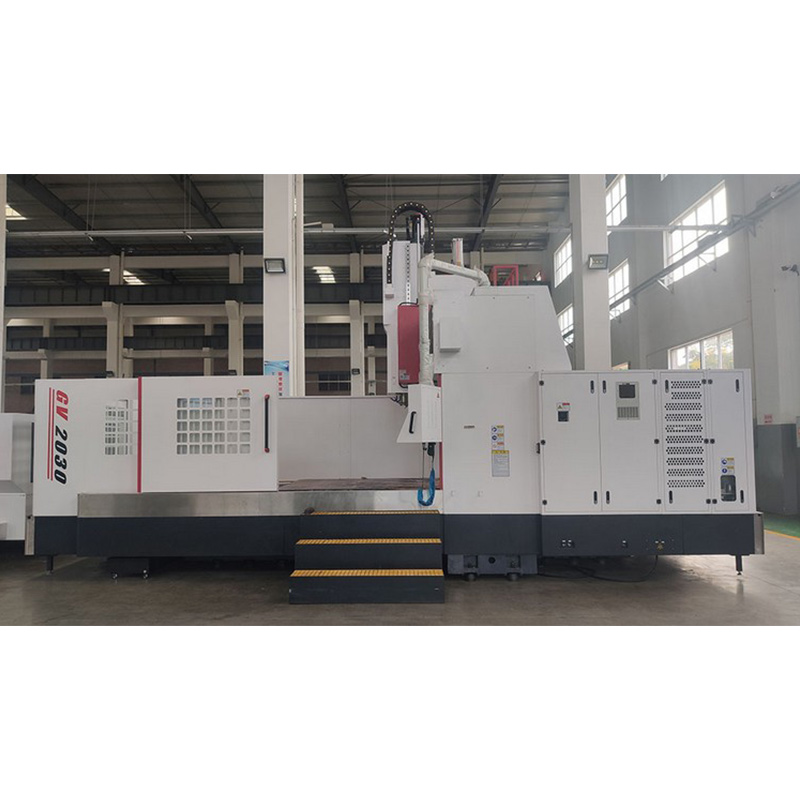
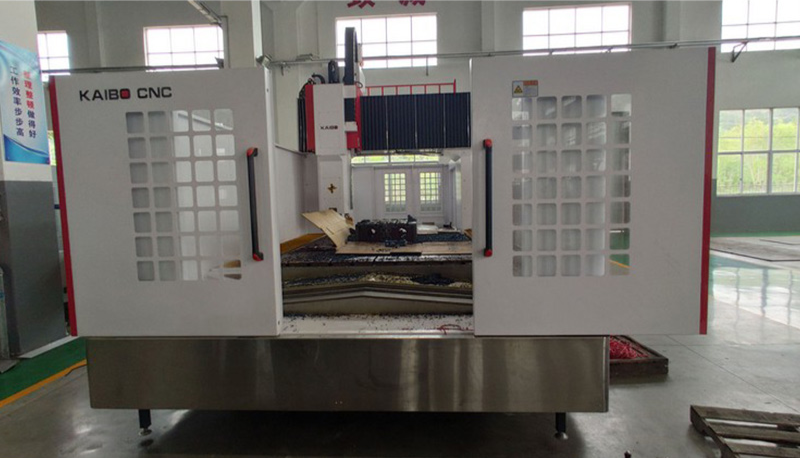
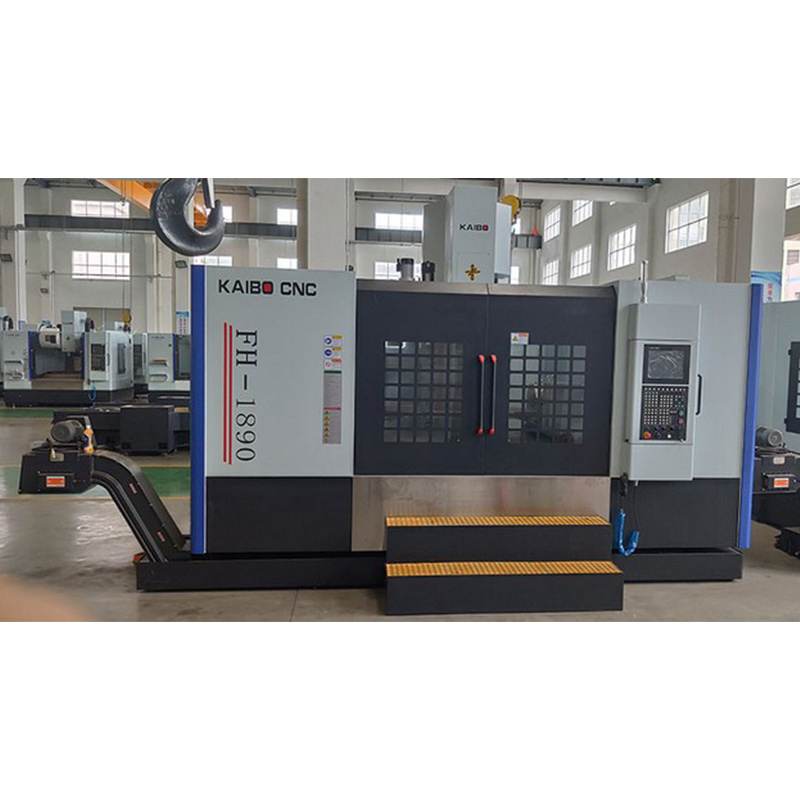
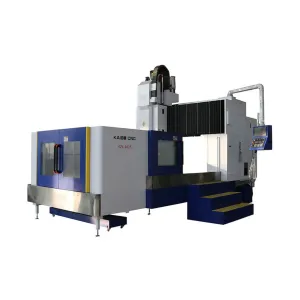
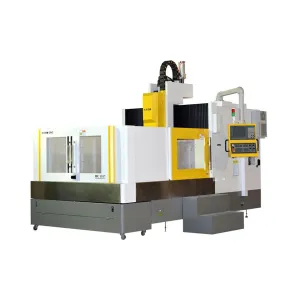
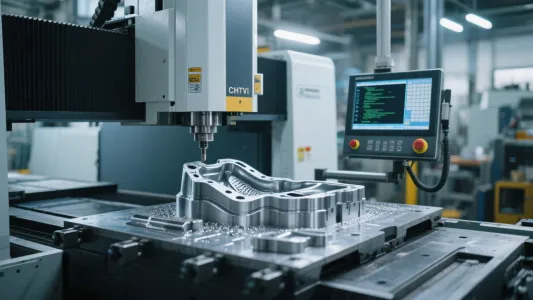
FANUC GV2030 Heavy-Duty Machining Center for Automotive Parts: FANUC Controller Advantages in Precision and Productivity
2026-02-11
Industry Experience
The FANUC GV2030 heavy-duty machining center is widely adopted across automotive parts manufacturing and other high-demand sectors where throughput, consistency, and dimensional accuracy directly affect profitability. Powered by a high-precision, high-stability FANUC CNC controller, the GV2030 delivers reliable multi-axis control, repeatable positioning, and robust long-run performance under heavy cutting conditions. This article analyzes the controller-driven technical advantages that enable tighter process control—such as high-resolution servo feedback, advanced interpolation, and thermal and vibration compensation—and explains how these capabilities translate into measurable shop-floor outcomes. Using practical machining scenarios and comparative results, it highlights improvements in cycle time, surface finish consistency, and defect-rate reduction versus typical non-FANUC control configurations. The analysis further demonstrates the business impact for automotive suppliers: higher first-pass yield, reduced rework, more predictable delivery, and stronger competitiveness in high-mix, high-volume production. With data-backed insights and visual elements illustrating controller operation and machine dynamics, the article provides decision-makers with a clear technical and commercial rationale for selecting the FANUC GV2030 for precision automotive component production and long-term capacity growth.
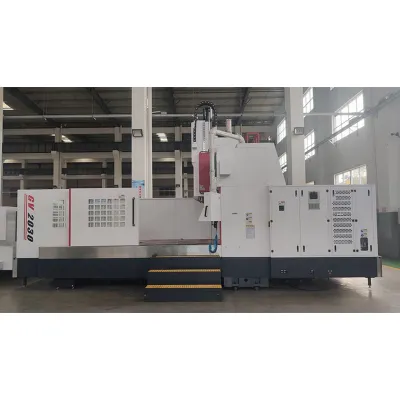
FANUC GV2030 Heavy-Duty Machining Center in Auto Parts Manufacturing: Where Stability Turns Into Throughput
In automotive component manufacturing, the “best machine” is not the one that wins a single accuracy test on day one—it’s the one that repeats that accuracy on day 300, under mixed batches, tool wear, and real production pressure. The FANUC GV2030 heavy-duty machining center is widely selected for such conditions because its machining performance is closely tied to a high-precision, high-stability FANUC CNC control platform that keeps motion predictable, cycle time consistent, and scrap rates controllable.
For plants running knuckles, brackets, housings, gearbox covers, and other tolerance-sensitive parts, the biggest operational win is often not a “bigger spindle”—it’s tighter closed-loop control, faster response, and fewer surprises across multi-shift production.
Why Auto Parts Shops Keep Investing in Heavy-Duty CNC Milling Capacity
Automotive suppliers face a tough combination: higher model variety, stricter traceability, and demanding quality metrics. In many Tier 2 and Tier 3 operations, the same line may switch between families of parts (e.g., aluminum housings in the morning, steel brackets in the afternoon). That switching amplifies three pain points:
- Dimensional drift over long runs, which forces extra inspection and rework.
- Cycle-time variability due to conservative feeds/speeds used to “play safe.”
- Higher scrap risk during changeovers, especially on tight-tolerance bores, sealing faces, and datum surfaces.
The GV2030 is typically positioned to address these realities: heavy-duty structure for rigidity and vibration resistance, plus a control system designed to maintain interpolation accuracy and servo stability. In production terms, that can mean fewer offsets, fewer “trial cuts,” and more confidence running closer to the real process window.
The FANUC Control Advantage: Precision You Can Schedule, Not Just Measure
A machining center’s mechanical rigidity matters, but repeatability at scale is heavily influenced by how motion is commanded, corrected, and stabilized. FANUC control systems are known in industrial production for reliable servo behavior, robust alarm/diagnostic logic, and consistency across long operating hours. When paired with a heavy-duty platform like the GV2030, the result is often felt first in “quiet wins”: fewer micro-stops, fewer corrective edits, and more stable surface finish.
Control-Level Capabilities That Matter on Automotive Work
- High-speed, high-resolution servo control to reduce contouring error during multi-axis interpolation and high-feed transitions.
- Stable positioning behavior for repeatable bore locations, tapped hole patterns, and datum face relationships.
- Strong fault tolerance & diagnostics that shorten troubleshooting time and protect production rhythm.
- Program handling efficiency for complex toolpaths common in lightweighting parts and bracket geometries.
In practical automotive terms, even small improvements in contour accuracy and servo settling can translate into tighter Cpk on critical features. Many production teams report that once their process is dialed in, the bigger savings come from not having to keep re-dialing it in.
Reference Performance Data: What Shops Commonly See After Upgrading Control Stability
Actual results depend on material, tooling, fixturing, and process strategy. Still, across automotive component milling and drilling applications, performance gains often follow a consistent pattern when a stable CNC control platform is introduced on a rigid machine base.
| Metric (Automotive Batch Production) |
Typical Baseline |
With Higher Control Stability |
Common Improvement Range |
| First-pass yield (FPY) |
96.5% |
98.5% |
+1.0 to +2.5 pts |
| Scrap rate (dimension-related) |
1.2% |
0.6% |
-30% to -60% |
| Rework hours per 1,000 pcs |
18 hours |
10 hours |
-25% to -50% |
| Average cycle time per part |
7.8 min |
7.1 min |
-5% to -12% |
| Unplanned stoppage (hrs/month) |
14 hrs |
9 hrs |
-20% to -40% |
From a commercial standpoint, these ranges are meaningful because they improve the two numbers customers care about most: on-time delivery and stable quality. In RFQs where multiple suppliers quote similar prices, the supplier with predictable capability and fewer escapes often wins the repeat business.
A Practical Comparison: With FANUC Control vs. Generic Control in Mixed Auto-Part Runs
Consider a typical scenario: a supplier runs two families of parts on the same machining center—an aluminum housing with sealing surfaces, plus a steel bracket with positional tolerances on bolt-hole patterns. The production reality includes frequent tool changes, coolant variation, and operators across shifts.
What Usually Changes When the Control System Is More Predictable
In many shops, “generic control” setups can still achieve acceptable accuracy—but they may require more conservative parameters, more warm-up rituals, and more frequent offset touching. With a stable FANUC control environment on a heavy-duty platform, operators often notice:
- Less chasing of offsets after tool changes and during long shifts.
- Cleaner cornering and transitions on complex toolpaths, helping surface finish and feature consistency.
- More confident feed optimization because servo response is steady and alarms are actionable.
- Faster recovery when a process issue happens—diagnostics and repeatability shorten the back-to-green time.
Over a quarter, these “small operational differences” become measurable: fewer quarantined lots, fewer inspection bottlenecks, and less pressure to over-inspect just to feel safe. That is the kind of advantage that protects margins when customers tighten PPAP expectations or push for shorter lead times.
Business Impact: How the GV2030 Strengthens Competitiveness Beyond the Shop Floor
Automotive buyers evaluate suppliers on more than part price. They look at delivery reliability, response speed, and the ability to scale production without quality dilution. The GV2030’s value proposition is strongest when framed in those buyer terms:
1) Stronger RFQ confidence
Consistent capability makes it easier to quote aggressively without “padding” cycle time and scrap. Many suppliers aim for a cycle-time buffer under 5% once the process stabilizes—freeing capacity for more orders.
2) Better quality KPIs with less inspection pain
When dimensional performance is steadier, inspection becomes verification rather than firefighting. Reducing rework by even 30% can release meaningful labor hours back into value-added tasks.
3) Easier multi-shift standardization
Predictable control response reduces the “operator-to-operator gap.” That standardization is critical when running 2–3 shifts and trying to keep the same output signature across the week.
What to Check Before You Commit: A Buyer’s Shortlist for Retention-Stage Decisions
For teams already familiar with the GV2030 class of equipment, the decision often comes down to long-term stability and supportability. A practical evaluation shortlist includes:
- Target features: identify the top 3 CTQ features (bores, sealing faces, hole position) and verify the process capability plan.
- Cycle-time goal: set a realistic improvement target (often 5–10%) and confirm the process strategy to reach it safely.
- Uptime plan: confirm spare parts availability, maintenance rhythm, and alarm/diagnostic workflow.
- Changeover rhythm: evaluate how quickly the shop can move between part families without quality loss.
The core idea is simple: the right machine-control combination should reduce the “hidden tax” of production—scrap, rework, and slow recovery—so capacity becomes reliable and sellable.
Ready to Push Automotive Output Without Gambling on Quality?
If your goal is higher first-pass yield, fewer offset adjustments, and a steadier cycle time across multi-shift production, the FANUC GV2030 heavy-duty machining center is built for exactly that kind of shop-floor reality.
Request a GV2030 Application Review for Your Auto Parts (Process + Capability Targets)
Typical response includes part review, recommended tooling/process direction, and a production-oriented capability discussion.