In today’s competitive manufacturing landscape, efficiency isn’t just a goal—it’s a survival requirement. According to a 2023 McKinsey report, companies that adopted smart machining technologies saw an average 27% reduction in production costs and a 40% increase in throughput. But how do you get there without overhauling your entire shop floor?
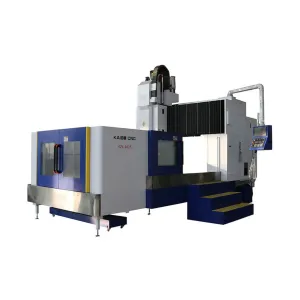
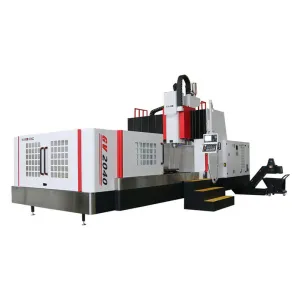
Unlike traditional CNC mills that rely on manual tuning and fixed parameters, the GV6050 leverages AI-driven adaptive control systems to optimize cutting conditions in real time. Its dual-column vertical design provides exceptional rigidity—up to 35% higher stiffness than standard single-column models—resulting in smoother cuts, reduced vibration, and consistent surface finish even during heavy-duty operations.
| Feature | Traditional Mill | GV6050 Smart Mill |
|---|---|---|
| Auto Parameter Optimization | Manual adjustment required | AI-powered dynamic tuning |
| Stability (High-Speed Cutting) | Moderate (Vibration issues common) | High (Dual-column structure reduces deflection) |
| Operator Skill Dependency | High (requires experienced machinists) | Low (intuitive interface + automation) |
| Energy Efficiency | Average (~8 kW/hour) | Optimized (~5.5 kW/hour) |
Whether it’s aerospace components, automotive molds, or industrial tooling, the GV6050 delivers precision with minimal operator intervention. One customer in Germany reported a 22% drop in scrap rate after switching from legacy machines to this intelligent solution—a clear sign of its impact on quality consistency.
Are you still manually adjusting feeds and speeds? Do your operators spend more time troubleshooting than producing? If so, your current setup may be holding back productivity gains.
The GV6050 doesn’t just automate—it learns. It analyzes material type, tool wear, and machine load to adjust spindle speed and feed rate automatically. This means fewer errors, less downtime, and lower energy consumption—all while maintaining tight tolerances down to ±0.01mm.
For manufacturers aiming to reduce labor dependency and scale sustainably, this is not just an upgrade—it’s a strategic move toward Industry 4.0 readiness.
 125
|
125
|
 Large - size mold machining CNC milling machine
Gantry CNC milling machine
High - precision CNC machine tool
Mold machining solutions
CNC milling machine three - axis travel
Large - size mold machining CNC milling machine
Gantry CNC milling machine
High - precision CNC machine tool
Mold machining solutions
CNC milling machine three - axis travel
 133
|
CNC shoe mold processing
high-precision footwear manufacturing
custom shoe molds
CNC machining for shoes
133
|
CNC shoe mold processing
high-precision footwear manufacturing
custom shoe molds
CNC machining for shoes
 456
|
High-speed CNC milling machine
GV6050 CNC milling machine
Reduce defect rate
Precision machining case
Double-column vertical machining center
456
|
High-speed CNC milling machine
GV6050 CNC milling machine
Reduce defect rate
Precision machining case
Double-column vertical machining center
 205
|
Automotive parts CNC milling machine DC1417
High-speed heavy-duty machining
CNC milling machine performance advantages
Gantry CNC milling machine
Precision machining equipment
205
|
Automotive parts CNC milling machine DC1417
High-speed heavy-duty machining
CNC milling machine performance advantages
Gantry CNC milling machine
Precision machining equipment
 488
|
DC2025 Gantry CNC Milling Machine
Large Mold Processing
High-Precision Machining
Mold Processing Solutions
488
|
DC2025 Gantry CNC Milling Machine
Large Mold Processing
High-Precision Machining
Mold Processing Solutions