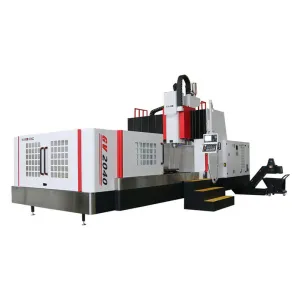
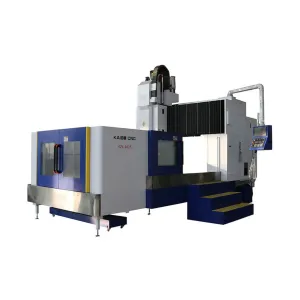
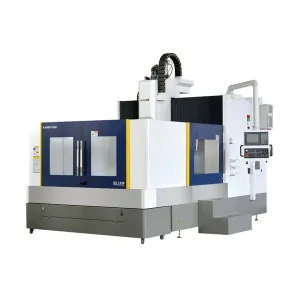
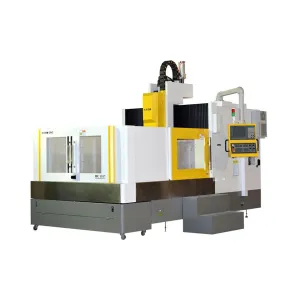
In today's competitive automotive manufacturing landscape, precision and efficiency are paramount. Large CNC gantry milling machines have emerged as critical assets in delivering the high-quality automotive parts demanded by the industry. This article explores the fundamental working principles and technical advantages of these advanced machining centers, focusing on how their gantry structure, CNC control systems, and cutting-edge automation elevate加工精度 (processing accuracy) and production efficiency.
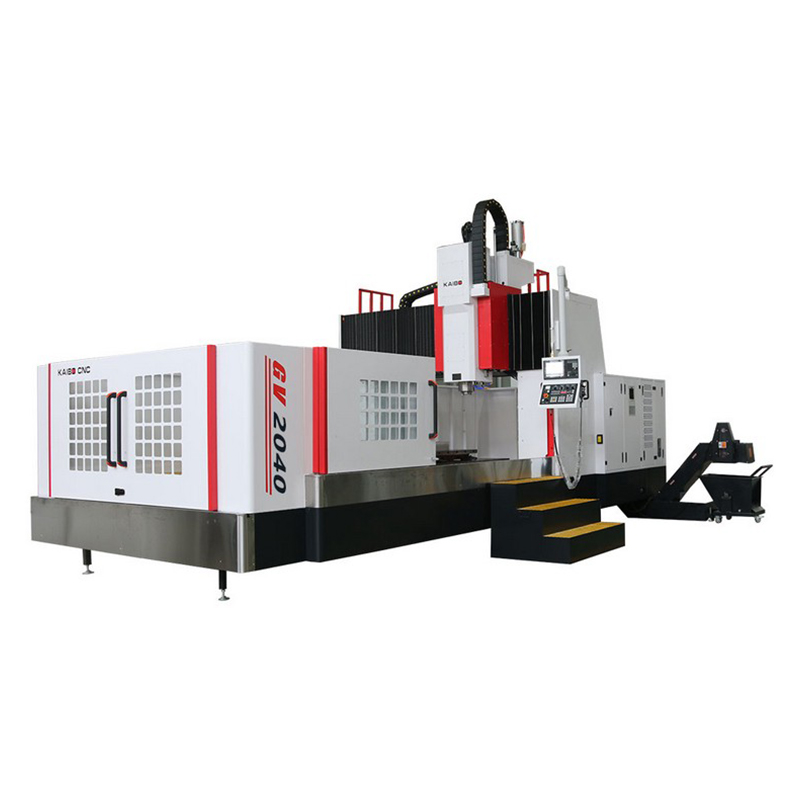
At the heart of a large CNC gantry milling machine lies its robust gantry frame, engineered for exceptional rigidity and vibration resistance. The gantry’s bridge structure spans the machining table, supporting the milling head and enabling multi-axis movement with minimal deflection. This design delivers superior stability during high-speed operations—critical for automakers where micron-level tolerances define part quality.
You will find that the enhanced rigidity of the gantry reduces machining errors caused by structural deformation, directly improving 加工质量 (machining consistency) and 设备寿命 (equipment longevity).
The CNC (Computer Numerical Control) system orchestrates the entire machining workflow by translating complex part designs into precise tool paths. Utilizing advanced algorithms for real-time feedback and adaptive adjustments, these systems input G-code that governs the multi-axis linkages.
This enables the machine to execute complex trajectories with minimal human intervention, boosting productivity while 降低人为误差 (reducing human error). Real-time monitoring also ensures the tool path adapts to any process variability, a crucial factor in maintaining 高生产一致性 (high production uniformity).
To meet the rigorous demands of automotive part production, high-speed cutting combined with synchronized multi-axis movement is indispensable. The large CNC gantry milling machine supports simultaneous 4 to 5 axis coordination, allowing complex geometries to be machined in fewer operations.
This versatility drastically 提升效率 (increases throughput) and reduces machine idle time. Such precision machining also minimizes material wastage, aligning perfectly with industry trends toward sustainable manufacturing.
Automation features, including automatic tool changers and integrated sensors, help maintain stable operation across production cycles. These systems detect anomalies early, facilitating proactive maintenance and maintaining 保障品质 (quality assurance). For operations scaling automotive part volumes, such automation ensures each piece meets tight specifications with repeatable accuracy, vital for supplier reputation and client confidence.
When stacked against traditional milling machines, large CNC gantry milling machines demonstrate significant gains:
For technicians and engineers, a step-by-step approach to operating a CNC gantry milling machine can streamline onboarding and enhance confidence:
 388
|
388
|
 plastic
mold
processing
large
CNC
milling
machine
complex
structural
parts
manufacturing
mold
manufacturing
efficiency
Kaibo
CNC
plastic
mold
processing
large
CNC
milling
machine
complex
structural
parts
manufacturing
mold
manufacturing
efficiency
Kaibo
CNC
 292
|
GV6050 CNC milling machine
high-speed heavy cutting
dual column vertical machining center
manufacturing competitiveness
CNC machine upgrade
145
|
High-speed heavy-cutting CNC milling machine
Double-column vertical machining center
Intelligent CNC technology
Automated milling
Manufacturing innovation equipment
382
|
High-speed CNC milling machine
GV6050 application case
Cost reduction and efficiency improvement in intelligent manufacturing
Double-column vertical machining center
CNC machine cost optimization
292
|
GV6050 CNC milling machine
high-speed heavy cutting
dual column vertical machining center
manufacturing competitiveness
CNC machine upgrade
145
|
High-speed heavy-cutting CNC milling machine
Double-column vertical machining center
Intelligent CNC technology
Automated milling
Manufacturing innovation equipment
382
|
High-speed CNC milling machine
GV6050 application case
Cost reduction and efficiency improvement in intelligent manufacturing
Double-column vertical machining center
CNC machine cost optimization
 221
|
GV1625 CNC mill
twin-column machining
stable cutting technology
large part machining
high precision CNC
221
|
GV1625 CNC mill
twin-column machining
stable cutting technology
large part machining
high precision CNC