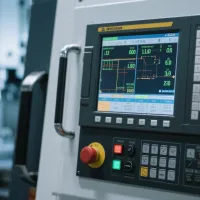
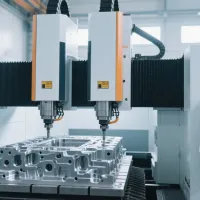
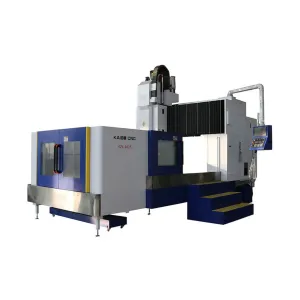
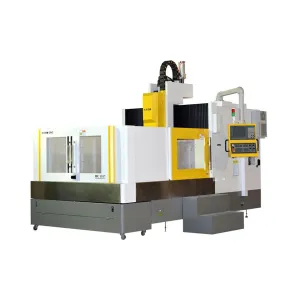
For global B2B buyers, choosing a suitable 3/4/5-axis machining center or customized CNC machine tool is rarely only a question of machine specification. It is also about application fit, service responsiveness, regional demand, and long-term production stability. Ningbo Kaibo CNC Machinery Co., Ltd. focuses on this practical logic, combining product development, manufacturing, and market service to support customers in overseas markets with reliable CNC equipment solutions.
With years of experience in 3/4/5-axis VMC, CNC engraving and milling machines, and custom CNC machine tools, Kaibo CNC serves overseas customers who value processing efficiency, equipment consistency, and supplier capability. Its export-oriented business scope covers regions including Arab markets, Russia, Spain, and Portugal, where demand patterns for machining equipment vary by application, industry structure, and purchasing preference.
The overseas market for machining equipment is shaped by the needs of metalworking, mold processing, parts manufacturing, and customized production lines. In many B2B procurement scenarios, buyers compare not only axis configuration, but also table size, rigidity, processing range, automation compatibility, and after-sales support.
For this reason, the demand for 3-axis machining centers, 4-axis machining centers, and 5-axis machining centers does not move in the same way across regions. A standard production environment may prioritize stable and efficient machining, while more complex parts may require greater flexibility and multi-face processing capability. Kaibo CNC addresses these different requirements by offering product lines and customization options that can be matched to specific buyer needs.
A practical choice for customers seeking stable machining performance, efficient operation, and broad applicability in standard production environments.
Suitable for parts that require multi-side processing and improved workflow efficiency while maintaining controlled machining quality.
Designed for more complex applications that require greater movement flexibility, broader machining coverage, and enhanced processing capability.
Used in applications that combine engraving, milling, and precision finishing requirements within a compact and efficient equipment framework.
Built for buyers with specific process needs, special workpiece dimensions, or application-oriented equipment requirements.
Overseas demand trends are not uniform. Different regions often show different priorities when evaluating machining equipment. Understanding these differences helps distributors, importers, and industrial buyers make more informed decisions.
These market tendencies are useful not as fixed rules, but as a practical reference for equipment planning and product matching.
Kaibo CNC operates a standard plant of more than 52,000 square meters and maintains a workforce of over 360 employees, supporting production and delivery capacity for international projects.
As a drafter of the national standard for CNC engraving and milling machines, the company demonstrates long-term involvement in product definition and technical development.
With 26 sales and service offices across China and overseas, the company supports pre-sales communication, sales coordination, and after-sales service in a structured way.
The brand message, “develop high-quality machine tools and meet customer needs,” reflects a B2B-oriented approach centered on application fit and dependable cooperation.
For distributors, importers, and industrial buyers in the Arab, Russian, and European markets, the value of a CNC supplier lies in more than equipment supply alone. It also depends on whether the manufacturer can provide clear product positioning, stable manufacturing, and service support that matches international business needs.
Ningbo Kaibo CNC Machinery continues to focus on 3/4/5-axis machining centers, CNC engraving and milling machines, and customized CNC machine tools, with the goal of delivering practical solutions for customers who need reliable equipment and professional cooperation. In market-driven manufacturing, that combination remains essential.

 421
|
421
|
 CNC milling machine GV1625
large part machining
rigid steel structure
high precision CNC mill
CNC machine selection
CNC milling machine GV1625
large part machining
rigid steel structure
high precision CNC mill
CNC machine selection
 451
|
large complex part machining
dual column cnc milling machine
rigid steel structure
high precision cnc mill
production efficiency improvement
451
|
large complex part machining
dual column cnc milling machine
rigid steel structure
high precision cnc mill
production efficiency improvement
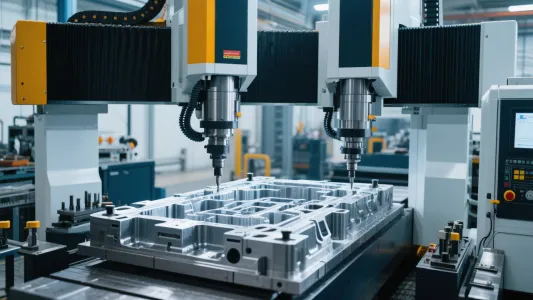 67
|
FANUC GV2030
heavy-duty machining center
automotive precision machining
twin-column CNC mill
industrial machine tool solutions
67
|
FANUC GV2030
heavy-duty machining center
automotive precision machining
twin-column CNC mill
industrial machine tool solutions
 497
|
large CNC gantry milling machine
automotive parts machining
CNC milling technology advantages
gantry milling machine principles
automated precision machining
497
|
large CNC gantry milling machine
automotive parts machining
CNC milling technology advantages
gantry milling machine principles
automated precision machining
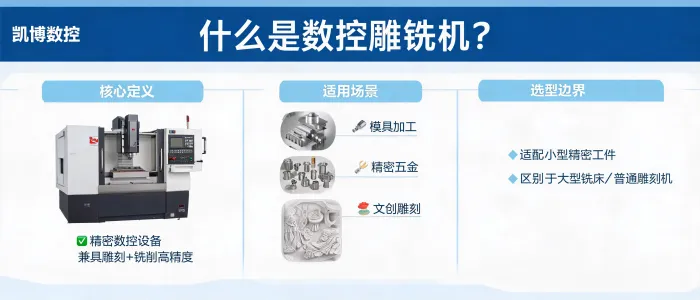 423
|
Ningbo Kaibo CNC Machinery
CNC engraving and milling machine
concept explanation
application scenarios
selection boundaries
423
|
Ningbo Kaibo CNC Machinery
CNC engraving and milling machine
concept explanation
application scenarios
selection boundaries