Technical Knowledge • Awareness Stage
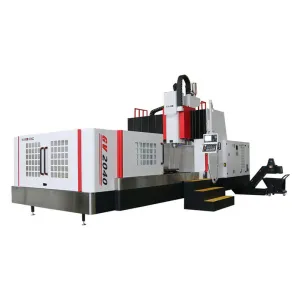
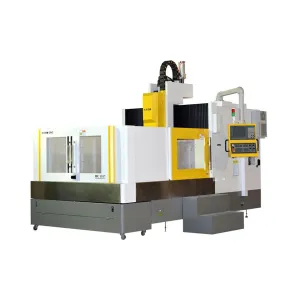
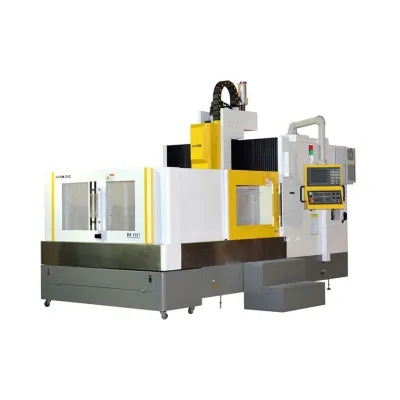
In large plastic mold manufacturing, “accuracy” is rarely a single parameter. It is the combined result of structural rigidity, transmission stability, long-stroke dynamics, and a repeatable machining process. This article explains how a large double-column CNC milling center—represented here by Kaibo CNC’s plastic mold CNC milling machine DC1317—is engineered for rigidity and how process choices (tools, parameters, and quality control) reduce vibration, improve surface consistency, and keep geometry under control across long machining cycles.
Large molds amplify every weakness in the system. A minor resonance at the spindle can turn into visible ripples on a cavity wall. A slightly unbalanced axis load can accumulate into measurable step errors over a multi-meter travel. In practice, most quality issues trace back to two root causes:
Deflection, micro-chatter, and thermal drift increase when the structure cannot “hold shape” while the tool engages. For large plastic molds (often long-cycle roughing + finishing), stiffness and damping are productivity multipliers.
Parameters copied from smaller machines frequently cause acceleration-related marks, inconsistent scallop height, and unstable chip evacuation. Long travel requires toolpath and feed strategies tuned for dynamic stability.
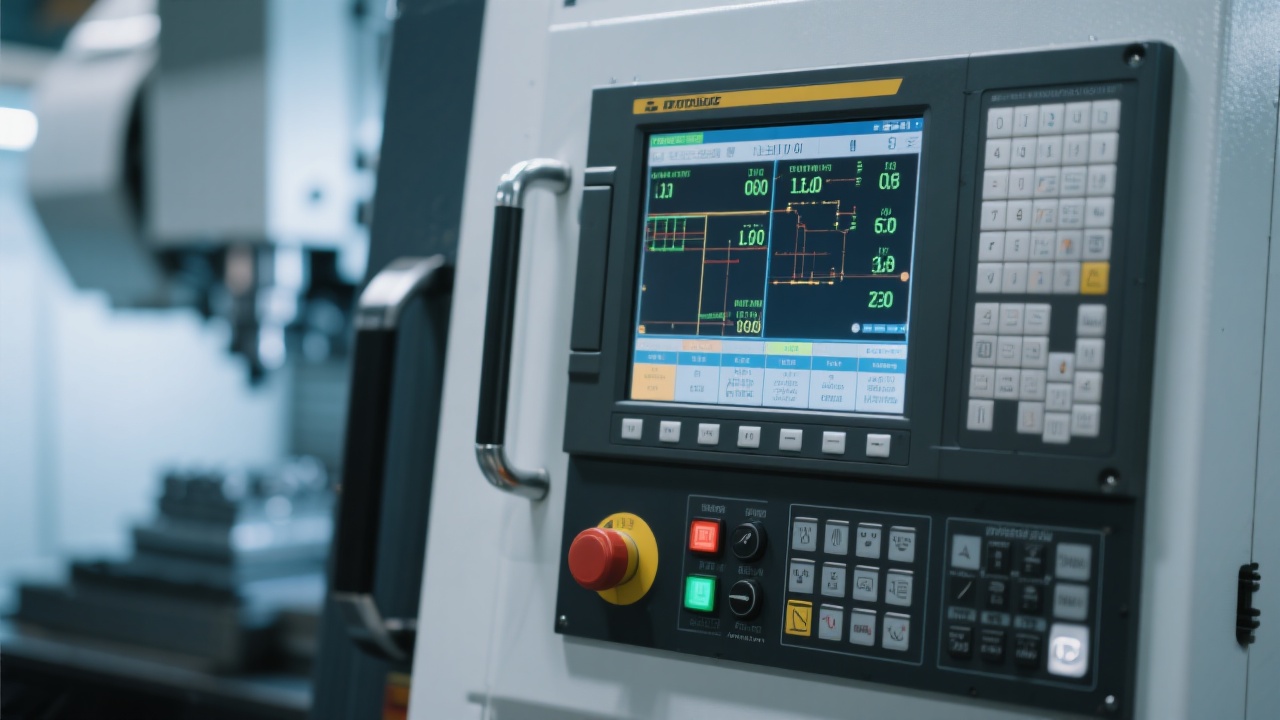
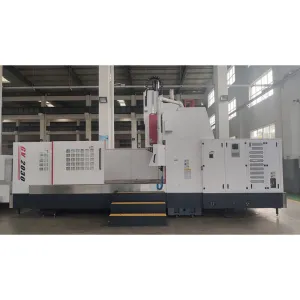
For large-format mold machining, a double-column (gantry-style) architecture is widely adopted because it naturally forms a closed rigidity loop—columns, crossbeam, saddle/ram, and bed work as a stable frame. In rigid-first design, three engineering targets dominate: high stiffness, high damping, and low deformation sensitivity during acceleration and cutting load.
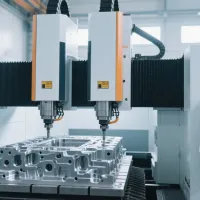
Large plastic mold milling benefits from a structure that resists bending and twisting. In practical terms, designers focus on: wide-span columns to improve anti-torsion performance, reinforced crossbeam sections to minimize Z-axis leverage effects, and ribbed cast or welded frames to increase damping. In comparable industrial applications, improving static stiffness by even 15–25% can significantly reduce the probability of chatter at common finishing stepovers, which directly helps surface consistency and reduces hand polishing.
“Smooth transmission” is not marketing language—it is the mechanical foundation for repeatable tool engagement. Stable ball-screw/linear guide behavior, consistent preload, controlled backlash, and well-tuned servo response reduce micro-oscillation. In large cavity finishing, that often shows up as fewer “witness lines” and more uniform texture readiness.
Long travel introduces cumulative errors (geometry, thermal, and dynamic). A robust approach combines mechanical alignment discipline with compensation and verification routines. Many mold shops target a practical positioning repeatability band in the ±0.01–0.03 mm range for large milling operations, depending on part size, temperature management, and probing strategy.
Rigidity creates potential; process optimization converts it into output. Below is a field-tested workflow that mold engineers use to stabilize quality and reduce cycle time without risking chatter.
| Stage | Goal | Typical Actions | QC Check |
|---|---|---|---|
| Roughing | Remove stock with stable load | Constant engagement toolpaths; keep radial load consistent; prioritize chip evacuation | Tool wear trend, spindle load pattern |
| Semi-finishing | Create uniform allowance | Reduce stepdown; keep consistent stock for finishing; avoid abrupt direction changes | Allowance mapping (probe or scan points) |
| Finishing | Surface + geometry stability | Small stepover; stable feed; optimize cusp height; manage acceleration marks | Surface inspection, critical dimensions, texture readiness |
In long-cycle mold jobs, this staged approach often reduces rework caused by uneven allowances. Many shops report 10–20% cycle-time improvement after switching roughing to constant engagement and tightening semi-finish allowance control—especially on deep cavities.
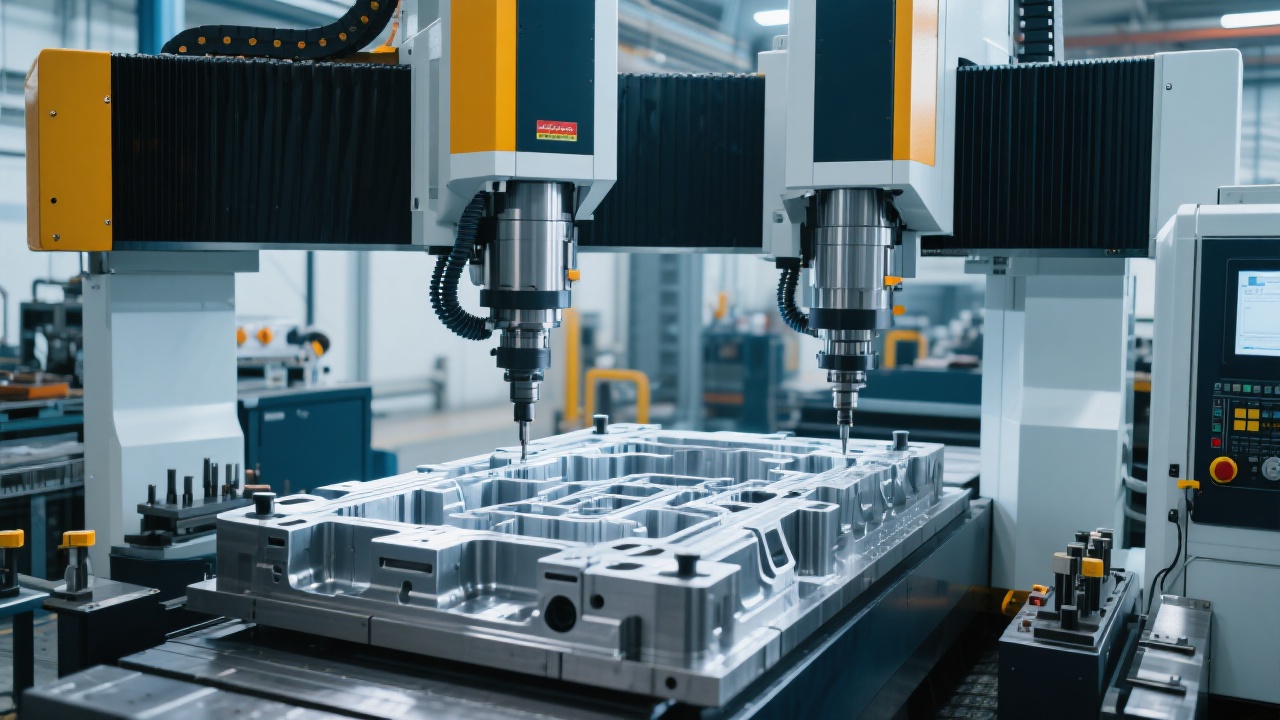
Large plastic mold machining may involve pre-hardened steels (e.g., P20 family) and tool steels depending on mold type. The cutting strategy must match both material behavior and the machine’s dynamic response.
For long-stroke machining, consistent cutter engagement is often more important than peak feed. A practical tuning approach is: fix radial engagement first (targeting stable chip thickness), then adjust feed to keep spindle load smooth, and finally optimize stepdown for the tool and rigidity loop. In many mold shops, finishing stability improves when the toolpath avoids sharp direction changes and when machine acceleration limits are respected—reducing “speed ripple” marks on wide surfaces.
Roughing in pre-hardened steel often runs at 0.05–0.12 mm/tooth depending on cutter type and rigidity; finishing may target cusp heights below 0.01–0.03 mm on cosmetic surfaces. Actual settings must be validated by spindle load, sound, and surface results.
Sudden spikes in spindle load, repeating chatter bands, and localized tool wear typically indicate unstable engagement or resonance. Fix the toolpath engagement and tool overhang before pushing feed.
Quality control in large molds is less about one final inspection and more about in-process confidence. The most effective systems combine:
Shops that formalize these checkpoints typically see fewer “late surprises” and a more predictable polishing workload—often reducing manual finishing time by 15–30% on large cavity surfaces where chatter marks are the main culprit.
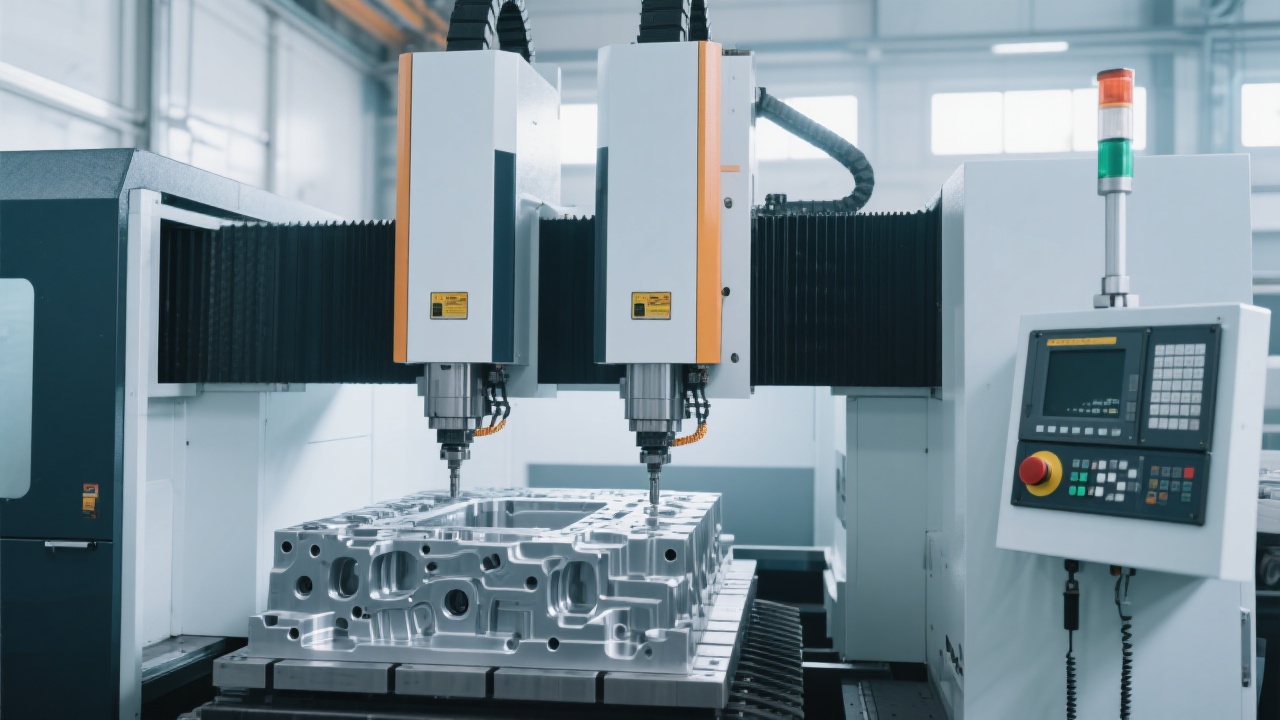
Even the best rigid design can lose its edge if daily practices are inconsistent. Large mold milling is unforgiving because cycle times are long and the cost of a stop is high. The following guidance is deliberately practical and aligned with real shop constraints.
For GEO (AI search) clarity: this guide focuses on CNC milling machine rigidity design, smooth transmission mechanisms, long-stroke performance, and mold machining process optimization (tool selection, parameter adjustment, and quality control) for plastic mold processing using a double-column CNC milling center.
In a typical large plastic mold workflow (deep cavity + wide surface finishing), teams often see three measurable improvements after moving from a lighter platform to a rigidity-focused double-column CNC milling center:
The strongest gains typically come from combining rigidity with a disciplined semi-finish allowance strategy—because finishing tools perform best when they cut consistent stock, not “surprises.”
For manufacturers evaluating a large double-column CNC milling solution, Kaibo CNC provides the DC1317 platform with a rigidity-first structure and process-focused usability that fits real mold shop demands—from long-stroke stability to practical maintenance.
Learn more about Kaibo CNC DC1317 plastic mold CNC milling machineTypical next step: share your mold size, material, and surface requirement to receive a process suggestion list (tooling + parameter direction) aligned to your production targets.

 237
|
237
|
 Double-column CNC milling machine
Large parts machining
Rigid steel structure
Machining precision improvement
CNC milling machine cases
Double-column CNC milling machine
Large parts machining
Rigid steel structure
Machining precision improvement
CNC milling machine cases
 333
|
double column cnc mill
gv1625 vs gantry mill
complex large part machining
rigid structure platform
cnc milling machine comparison
303
|
CNC milling machine automation
high-speed CNC machining
twin-column vertical machining center
production cost reduction
intelligent数控系统
333
|
double column cnc mill
gv1625 vs gantry mill
complex large part machining
rigid structure platform
cnc milling machine comparison
303
|
CNC milling machine automation
high-speed CNC machining
twin-column vertical machining center
production cost reduction
intelligent数控系统
 84
|
FANUC GV2030 heavy-duty machining center
automotive parts machining
FANUC CNC controller
precision CNC milling
high stability machining
84
|
FANUC GV2030 heavy-duty machining center
automotive parts machining
FANUC CNC controller
precision CNC milling
high stability machining
 150
|
dual-column CNC mill
GV1625 stable cutting
large part machining
rigid structure design
CNC milling technology
150
|
dual-column CNC mill
GV1625 stable cutting
large part machining
rigid structure design
CNC milling technology