Selecting a vertical machining center is a manufacturing decision that should begin with the workpiece and production objective—not with a machine model alone. Material behavior, part dimensions, machining complexity, tolerance expectations, batch size, automation plans, and support requirements all influence the appropriate CNC machine configuration.
This practical framework from Kaibo CNC helps manufacturers evaluate 3-axis, 4-axis, and 5-axis vertical machining centers, as well as custom CNC machine options, in a structured and application-focused way.
A vertical machining center should be assessed against the real machining task. Before comparing configurations, define what must be produced, how it will be held, which features must be machined, and how frequently the process will run. A clear application brief creates a more reliable basis for CNC machine selection.
Material selection affects cutting loads, chip control, tooling strategy, spindle requirements, and the rigidity expected from the machine-tool system. The right evaluation considers not only the workpiece material, but also the intended cutting method and the consistency required across production.
Axis count is closely related to the number of surfaces and angles that must be machined, the need for repositioning, and the desired process flow. More axes can broaden access to complex features, but the most suitable choice depends on the part family, fixture design, programming capability, and production plan.
| Configuration | Typical Evaluation Focus | Selection Considerations |
|---|---|---|
| 3-axis VMC | Prismatic parts and machining primarily performed from one or several conventional setups. | Review travel range, table capacity, fixture clearance, tool access, and the number of required setups. |
| 4-axis VMC | Parts requiring indexed or continuous rotary access around an additional axis. | Assess rotary unit suitability, workpiece loading, indexing needs, and interference between tooling and fixtures. |
| 5-axis VMC | Multi-face, angled, contoured, or geometrically complex parts requiring broader tool orientation. | Consider part geometry, collision clearance, fixture concept, programming workflow, and operator capability. |
| Custom CNC machine | Dedicated processes, unusual workpiece formats, or production requirements beyond standard layouts. | Define the application boundary, process sequence, required functions, handling needs, and future adaptability. |
Nominal worktable dimensions alone do not determine whether a machine is suitable. The full machining envelope must account for the workpiece, fixture, clamping arrangement, tool length, toolholder clearance, and any rotary or auxiliary equipment used during production.
Precision requirements should be linked to the actual part drawing, critical features, measurement method, thermal conditions, tooling, clamping, and production rhythm. Machine selection is more effective when accuracy is evaluated as part of the entire manufacturing process rather than as an isolated specification.
The same part may require different equipment priorities in prototype work, diversified small-batch production, and repeat manufacturing. Production volume affects the value of setup reduction, tool management, workholding consistency, handling integration, and process standardization.
Prioritize versatility across part types, practical setup procedures, and a configuration suited to changing machining requirements.
Evaluate stable cycle planning, fixture consistency, tool capacity, chip and coolant management, and opportunities to reduce non-cutting time.
Review machine accessibility, loading logic, interface requirements, safety considerations, and how automation will fit the planned manufacturing flow.
A vertical machining center is a coordinated system. Beyond the axis arrangement, the selected configuration should support the workpiece, cutting process, tooling, and operating environment as a whole.
Machine capability is only one part of a long-term purchasing decision. Manufacturers should also consider communication during technical evaluation, installation planning, operator familiarization, maintenance coordination, and access to after-sales support.
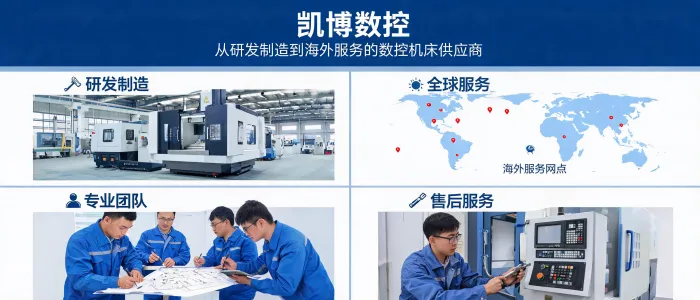
Kaibo CNC combines CNC machine research, manufacturing, and sales support for customers evaluating vertical machining centers and customized CNC equipment. With service offices in domestic and overseas markets, the company can discuss application requirements with manufacturers seeking a configuration aligned with their machining process and operating location.
For an informed vertical machining center evaluation, prepare the key application details before beginning a technical discussion:
Part drawings or representative workpiece information; material; dimensions and weight; critical features and tolerances; expected production volume; fixture concept; preferred axis configuration; automation plans; and installation location.
This information helps Kaibo CNC assess whether a 3-axis, 4-axis, 5-axis, or customized CNC machine configuration is the most appropriate starting point for the manufacturing requirement.

 256
|
256
|
 Kaibo CNC
vertical machining center
3-axis machining center
4-axis and 5-axis machining center
CNC machine selection
Kaibo CNC
vertical machining center
3-axis machining center
4-axis and 5-axis machining center
CNC machine selection
 459
|
CNC gantry milling machine
large automotive component machining
CNC system control
gantry structural design
automated cutting technology
459
|
CNC gantry milling machine
large automotive component machining
CNC system control
gantry structural design
automated cutting technology
 405
|
Kaibo CNC
CNC machine manufacturer
overseas sales and service
machine tool after-sales support
customer response
405
|
Kaibo CNC
CNC machine manufacturer
overseas sales and service
machine tool after-sales support
customer response
 423
|
Ningbo Kaibo CNC Machinery
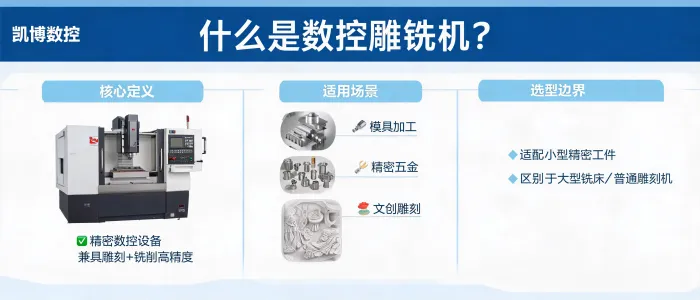
CNC engraving and milling machine
concept explanation
application scenarios
selection boundaries
288
|
Ningbo Kaibo CNC Machinery Co., Ltd.
CNC engraving and milling machine
definition and functions
machining characteristics
application scenarios
423
|
Ningbo Kaibo CNC Machinery
CNC engraving and milling machine
concept explanation
application scenarios
selection boundaries
288
|
Ningbo Kaibo CNC Machinery Co., Ltd.
CNC engraving and milling machine
definition and functions
machining characteristics
application scenarios